
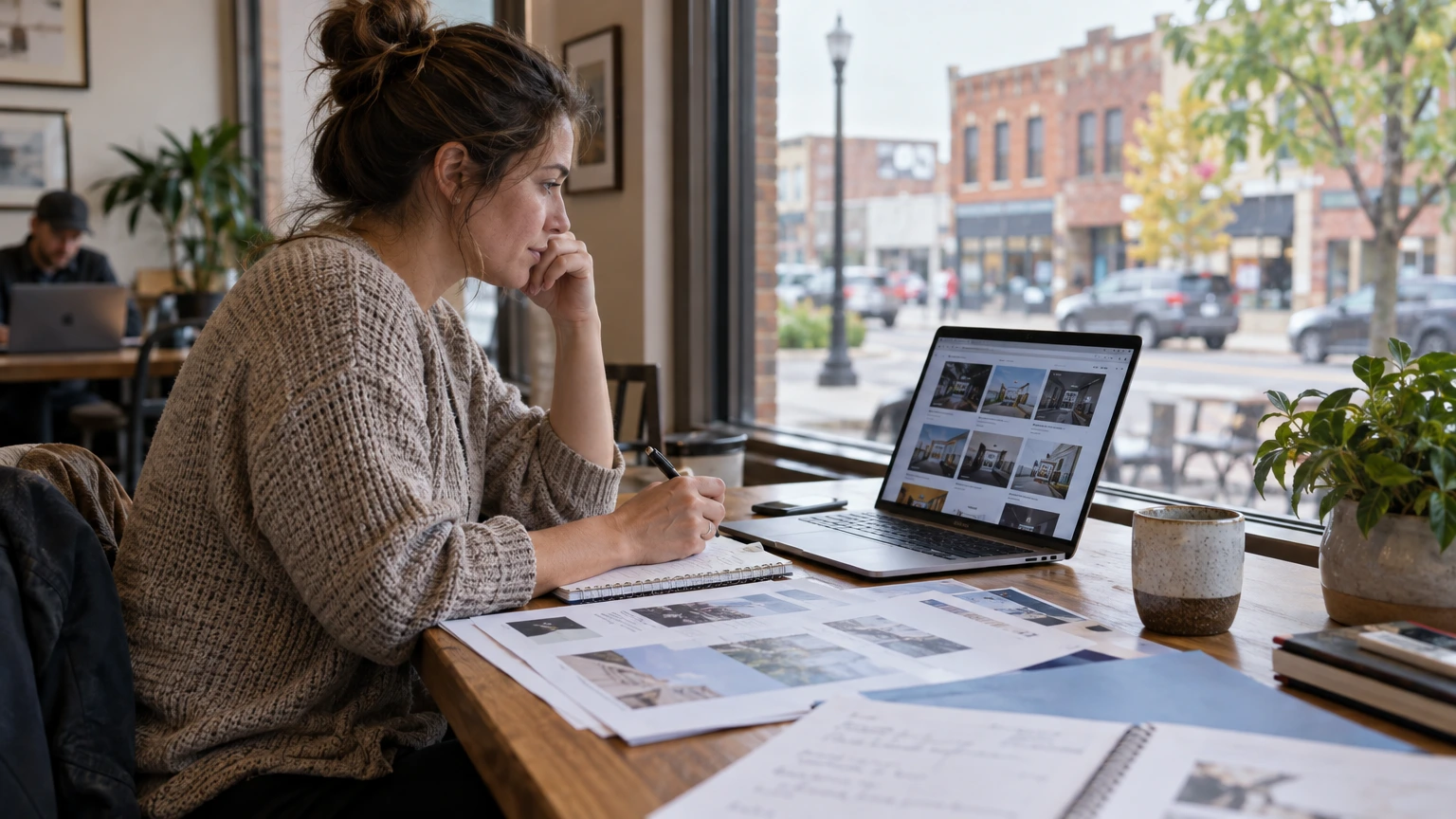
You've decided your business needs a better website. You know what you want it to do. Now you're looking at web design options in Edwardsville, Belleville, and the Metro East, and the range is all over the place. $500 templates. $15,000 agency builds. Monthly contracts. Flat fees. Designers who want discovery calls, and designers who want your logo.
Not every web designer operates the same way, and the differences matter more than the price tag.
Portfolio tells you style, not process
A designer's portfolio shows you what they can build, not how they work or whether they'll finish on time.
Live sites show you the real thing, how it loads, how it flows on mobile, whether it works. Screenshots can be edited. A link you can open on your phone tells you what a customer in Collinsville or Glen Carbon will see when they land on your site.
Look for consistency. A strong designer has a recognizable point of view, not because every project looks the same, but because there's a quality and intentionality that runs through all of it. If the portfolio jumps from polished to amateur across projects, that inconsistency will show up in your build.
Ask yourself if you see businesses like yours. You're not looking for someone who has built 50 HVAC sites. You're looking for someone who has worked with owner-operated businesses where the website is the primary marketing asset, not a footnote in a bigger campaign.
Timeline and revision policy separate finishers from starters
A straightforward small business website typically takes 4-8 weeks from discovery to launch when the process includes real revision rounds. Anything shorter than two weeks and you're getting a template with your name dropped in. Anything longer than eight weeks without a clear reason and you're dealing with either an overcomplicated process or a designer who doesn't prioritize finishing.
Ask what the revision policy is. "Unlimited revisions" sounds great. In practice, it often means neither of you is clear on when the project ends, which leads to scope creep and a final product that's been revised into something neither of you loves. Two or three structured revision rounds with clear feedback windows keeps the project moving and the design focused.
Ask how long their last project took and whether it finished on budget. The honest answer separates designers who ship from those whose portfolio looks better than their delivery record.
Who handles copy, hosting, and updates after launch
A lot of designers expect completed copy and all of your imagery before they will even begin. If writing isn't your strength, that becomes a problem you didn't see coming. Ask upfront whether copywriting is included or whether they have a process to help you figure out what to say.
The same applies to hosting, SSL, backups, and updates. Who handles updates? What if something breaks? What do you own? You should leave the project knowing exactly how to maintain your own site and what your options are if you need help later.
Web design in the Metro East ranges from one-person studios in Edwardsville to full agencies in Belleville to offshore template shops with a 618 area code forwarding number. The designer who builds the site may not be the person who answers the phone six months later when a form stops working. Ask who you'll be working with, and whether that person will still be reachable after launch.
The three types you'll see in Edwardsville and Belleville
Big agencies usually have full teams: designers, developers, SEO specialists, project managers. The process is polished, the timeline is long, and the price is high. Often $20,000 to $50,000 or more. You'll get something professional, but it's easy to end up with a site that feels generic because it was built by committee.
Freelancers are often the most approachable option. This is usually one person doing it all, sometimes a specialist in one area like design or development, other times a jack-of-all-trades handling every piece themselves. Pricing is lower. Timelines are faster. Many don't offer strategy, copy guidance, or marketing insight; they'll build what you ask for, but that's it.
Boutique studios offer personal attention and clear communication. You're never project number 27. They balance personality with strategy so your site both looks good and works. The owner or founder is typically involved in the day-to-day work, and they understand creative, visual small businesses and care about your long-term growth.
LocalCraft Digital operates in the third category. One person, working from Main Street in Edwardsville. You see the site live before you pay, and the first version is typically ready in 48 hours. No proposal rounds, no deposit, no revision surprise fees. The build includes local SEO, AI search optimization, lead tracking, and hosting. You know what it costs before you start, and you know who's building it.
What the questions tell you about the designer
A designer who jumps straight to pricing without asking anything about your goals, your audience, or what you've tried before is going to give you something that looks okay and does nothing. Design without strategy is decoration.
Walk through the designer's process from start to finish. They should be able to tell you exactly what happens: discovery, design, revisions, launch, without you having to pry. Vague answers without any real structure is a flag.
Ask what their process is from start to finish. Will you be working directly with them or someone else? Do they offer support after launch? Will they help with strategy, or is this design-only? Have they worked with small businesses like yours?
The designer who asks smart questions about your business, your customers, and what's broken about your current site is the one who will build something that works. The one who asks for your logo and a credit card is the one who will build something that looks fine in a screenshot and doesn't convert.
Red flags that show up early
A price that seems too good to be true is almost always a template with a logo dropped in. The fee is mostly for technical setup, not strategy, custom design, or anything that makes the site yours. You tend to pay for it later, either in a rebrand or in the slow revenue drain of an underperforming site that costs you clients you never knew you lost.
A contract isn't a sign of distrust; it's a sign of professionalism. It protects both of you. If someone is hesitant to put scope, timeline, and payment terms in writing, keep looking.
How someone communicates during the sales process is how they'll communicate mid-project. If it's already inconsistent, expect that to continue. Slow responses before you've signed a contract don't improve after the deposit clears.
Some designers show screenshots of sites they didn't build. If they can't explain their specific role in a project they're showing you, that's worth pressing on before you sign anything.
What a site in the Metro East should include
Every site built for Edwardsville, Belleville, Collinsville, or the surrounding area should be mobile-responsive, fast, and structured for local search. A 1-second delay in page load can cut conversions by roughly 7 percent. Design quality and technical performance are the same decision, not two separate ones.
The site should include schema markup, Google Business Profile optimization, SSL, daily backups, and lead tracking on every call and form. These aren't upsells. They're table stakes for a site that generates leads instead of sitting idle.
LocalCraft Digital includes all of that as standard on every build. Custom design, local SEO, AI search optimization, hosting, and lead tracking. Flat pricing. No hourly billing. The site is built, shown to you live, and revised until you approve it. Nothing goes public until you say so.
If the web design options in Edwardsville and Belleville feel overwhelming, start with three questions: Can I see live sites they've built? What happens after launch? Will the person I'm talking to now be the person building my site? The answers to those three will narrow the field fast.
Ready to see what a site looks like before you pay for it?
Data-driven website design: how search intent should decide your pages walks through how to structure your site around what people search for, not what you want to say. If you're past research and ready to start, Get a free build and see the first version live in 48 hours.